Understanding the Key Differences between Certified and Notarized Legal Translation Services
The documentation process has changed over the years, and with the globalization of the world, legal documents are often submitted in a completely different country, such as the UAE, for immigration education purposes. So, in case you are submitting your visa application or signing international business contracts, legal translation become a necessity. But somehow, people here get confused. They couldn’t understand the difference between certified translations and notarized translations, as they serve distinct purposes.
Here, it is important to have a clear understanding of the differences between these two to avoid delays and rejection. While searching for certified translation services in Dubai or notarized translation, it is important to know what you or your business needs. Here, we will tell the clear difference between these two so that you can make an informed choice.
What Does Certified Legal Translation Offer?
When you opt for certified legal translation, you not only receive a translated document in the desired language, but alongside that, you receive a signed statement from the translator certifying that the translation is done accurately to the best of their knowledge. Upon submitting, it also ensures the receiving authority that the content of the translated document is the same as the original.
You need a certified translation service in the following cases –
- Birth certificates
- Marriage certificates
- Academic transcripts
- Immigration documents
- Contracts
- Court papers
- Medical reports
The translation agency is solely responsible for the accuracy of the translation. Several local authorities, especially in a global business hub like the Dubai government and legal bodies, always ask for certified translations.
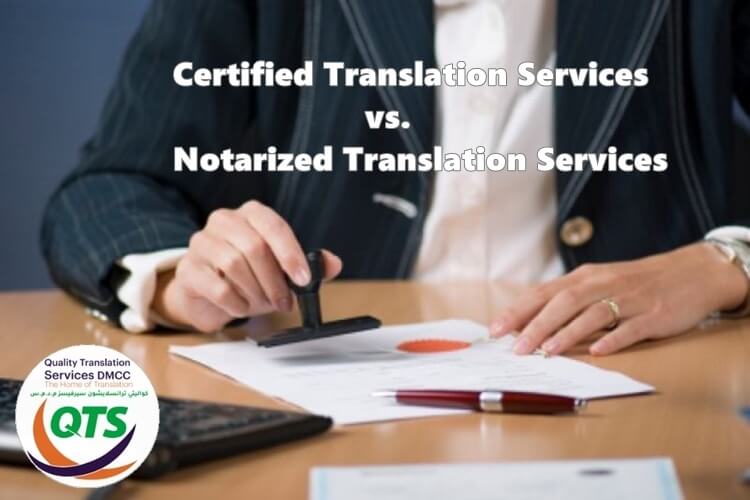
The following is a list of the things that will be mentioned in the certification statement issued by the translator –
- Translator’s name and signature
- Date of certification
- Contact details of the translator or agency
- Declaration of accuracy
This type of translation becomes highly important in the case of legal matters and especially in cases of immigrants. As in these cases, a minor error in translation can lead to huge negative impacts.
When Do You Need Notarized Legal Translation?
Notarized legal translation takes things one step further. These translated documents are verified by a notary, who validates the identity of the translator or the person who signs the certification that comes along with the translated document. The job of a notary is limited to the confirmation of the fact that the signature on the certificate is legitimate.
In the following cases, you might be requested to submit a notarized translation by the concerned authority –
- International legal proceedings
- Foreign court submissions
- Overseas property transactions
- Corporate agreements
- Certain embassy requirements
So, notarized legal translation in Dubai is just an additional layer of authentication required at the time when the translated document needs to be submitted in another country.
Certified Translation vs. Notarized Translation: At a Glance
There are several instances where these two terms are used interchangeably, but there are certain differences that we have mentioned below –
| Certified Translation Service | Notarized Translation Service |
1. Purpose | The primary focus is on maintaining the accuracy of the translation. | The main aim is to verify the identity of the singing authority on the certificate. |
2. Involved Authority | The translation is done by professional and certified translators or certified translation agencies. | In this case, a notary public will perform the duty of a witness in order to validate the signature. |
3. Legal Weightage | Will work for most of the official purposes. | Primarily needed when legal authenticity takes the forefront, which is the case in most of the international matters. |
4. Time and Cost | Turnaround time is shorter, and the cost of this translation is also lower compared to a notarized translation service. | The additional legal procedure extends the time to get the job done in case of notarized translation, and besides that, notarization fees also increase the overall cost of the translation. |
5. Acceptance | Accepted by most of the government bodies. | Judicial and immigration cases sometimes specifically ask for a notarized translation. |
How to Choose the Right Translation Partner for You?
To get the job done fast with accuracy, you need to partner with a qualified translation agency to have your back. Here are some of the areas that you need to focus on to choose the right translation agency –
- Experience in the business: You need to select from a sea of translation service providers. You should select one that matches your needs and has a significant amount of experience in the translation business. Check the client testimonials to ensure the legitimacy and quality of the work done by the service provider.
- Certification and Accreditation: Experience is not the last thing that you should focus on. You need to make sure that the translation service provider that you are opting for is certified by the concerned government authority, which is the Department of Justice in the case of the UAE.
- Notarization Support: In case your translation requires notarization, you need to ensure beforehand that the translation agency of your choosing is capable of providing notarization support.
- Privacy: In most of the cases the document that needs to be translated consists of sensitive data and in order to keep their confidentiality, sign the non-disclosure agreement (NDA) with the service provider.
- Delivery Time: Most of the legal procedures have a strict deadline. You should double-check the turnaround time for your work and also ensure that the quality of the work does not get compromised in the process.
Takeaway thoughts:
Choose a translation service on which you can rely completely to provide you with all the necessary support whenever you need it, most importantly to guide you when you get confused whether any particular document requires certification only or notarization is also needed for the acceptance of the translated document.
So, whether you require certified translation services in Dubai or notarization of your translated document, choose QTS, which has been doing both for the last few years to help several business owners and individuals to achieve their goals with the help of a reliable and professional translation service.
Comment (1)
Comments are closed.
Understanding the Key Differences between Certified and Notarized Legal Translation Services – Quality Translation Services DMCC
June 23, 2026[…] Source : Key Differences between Certified and Notarized Legal Translation Services […]